Before a research paper reaches a single reader, one question has to be settled, and it has nothing to do with the science.
Who is going to pay to publish it?
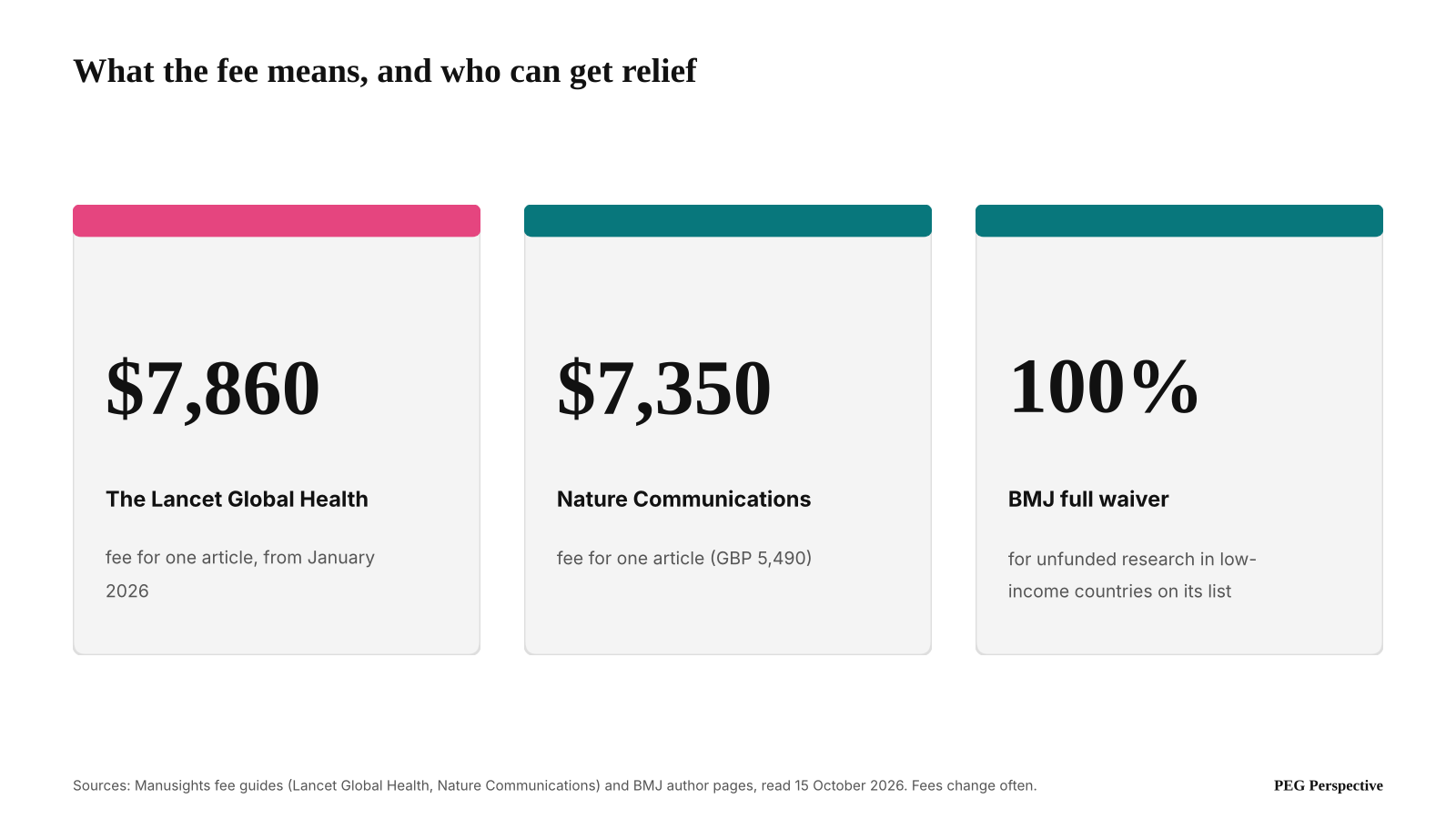
The numbers are easy to find. The Lancet Global Health charges $7,860 for an article.
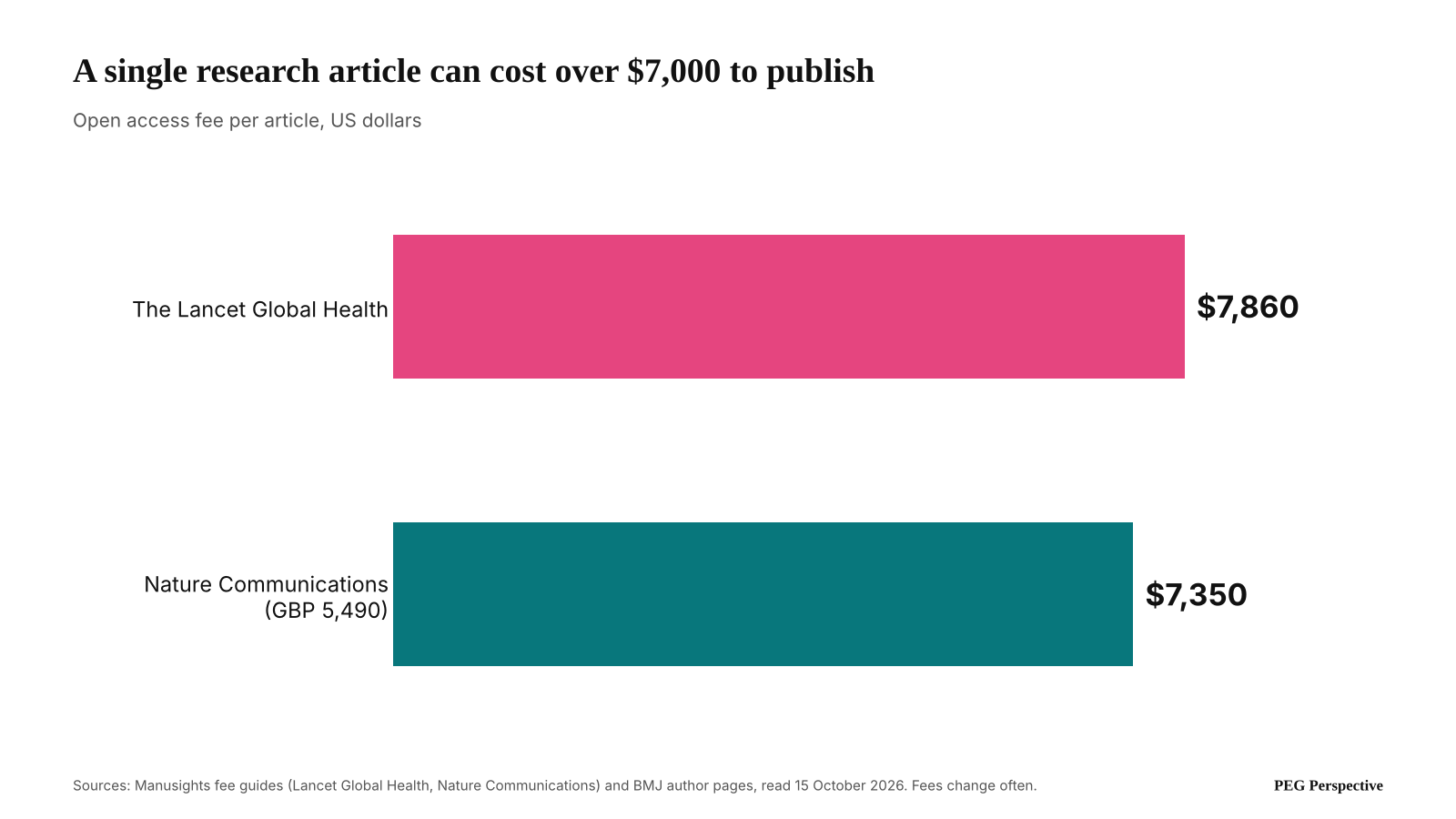
Nature Communications charges £5,490, which is about $7,350.
Many journals charge less, though fees in the thousands of dollars are common.
A funded laboratory in London or Boston can absorb a fee like that without a second thought.
A student or early-career researcher in Nigeria, working without a grant, cannot.
Some background helps here. Journals once made their money from subscriptions, so readers or their libraries paid. Open access changed that.
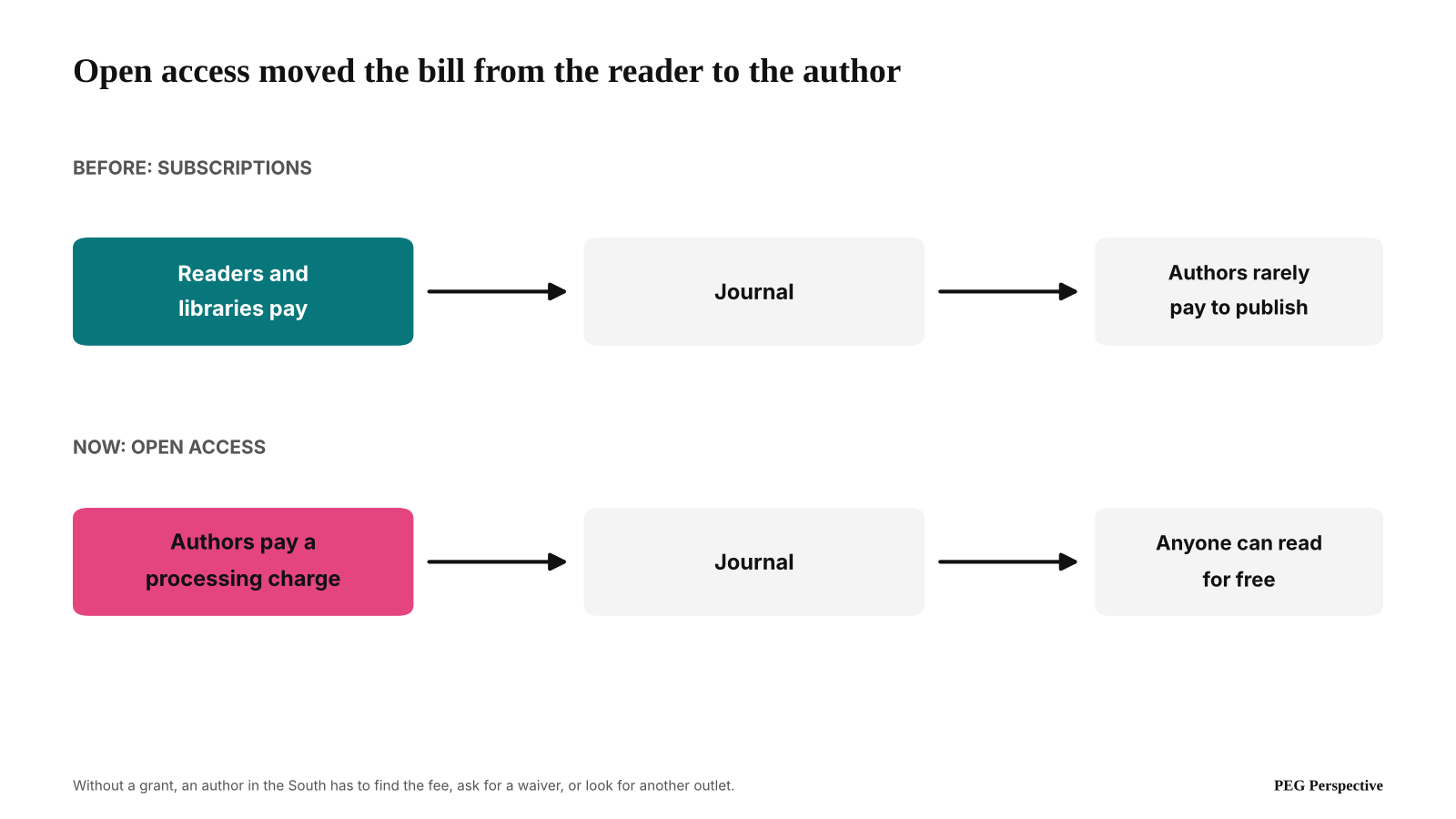
Anyone can now read the paper free, and the cost moves to the author in the form of an article processing charge.
Publishers say the money covers real work: managing peer review, editing, typesetting and hosting. That argument deserves to be taken seriously, because the work is not free. What matters is who ends up carrying the bill.
Waivers exist, and they matter. Many publishers tie relief to Research4Life country groups.
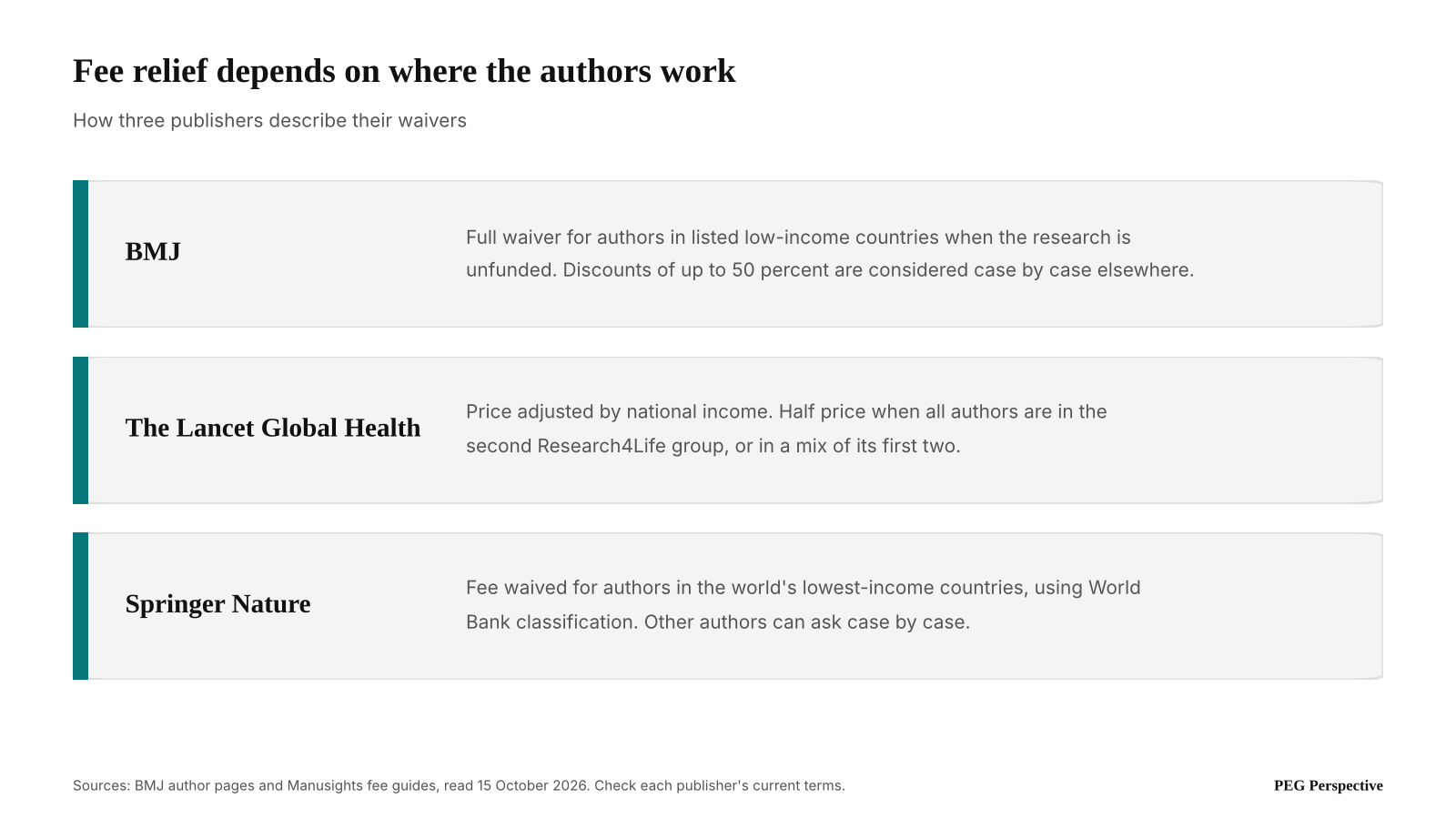
The BMJ waives the fee in full for authors in low-income countries on its list when the research is unfunded, and considers discounts of up to 50 percent case by case elsewhere.
The Lancet Global Health adjusts its price by national income and gives a 50 percent waiver when all authors come from the second Research4Life group, or from a mix of its first two. Springer Nature waives fees for authors in the world’s lowest-income countries by World Bank classification.
Nigeria is classed as lower-middle income, which appears to put it outside that waiver, so an author here has to ask case by case, at the moment of submission, and hope.
A 2026 paper in BMJ Global Health makes the wider point that income classification is a poor basis for deciding who gets support, because some researchers in upper-middle-income countries face the same barriers and are left out. A system that depends on asking favours is not the same as a system that is fair.
It would be wrong to say these fees stop research in the South. Research is happening in Nigerian laboratories and clinics every day, much of it on problems that matter to the people who live here. The real issue is what the fees do to that work after it is finished.
They shape which of it is published, where it appears and whose name sits at the front.
Journal choice is the first place this shows. A researcher who cannot pay the fee in a respected journal has two options. One is to aim lower, in a journal that few decision makers read.
The other is to use a cheaper outlet that charges a modest fee and offers little or no real peer review. Predatory journals exist because that demand exists. A researcher who ends up there is then judged for the choice, when the price pushed them to it.
Authorship is the second. When a partner institution in the North holds the grant, it often holds the fee as well. The practical result is that the first or last author position, the ones that carry credit, tends to go to the partner paying. Work done in a clinic in Benin City can end up with someone abroad as its public face.
Readers are the third.
The people most affected by a study of eye health, water or maternal care in West Africa are often the ones who never see it. Local evidence that is missing from the journals policymakers read is less likely to shape a decision. The cost of publishing ends up affecting what the world knows about the South, and who gets to say it.
None of this has a single villain. Publishers have real costs, funders have limited budgets and universities in the South have almost nothing to spare. Even so, there are fixes that can work. Diamond open access, where neither author nor reader pays, is one.
Platforms such as African Journals Online and SciELO in Latin America show that publishing built around a region can work.
Funders can pay fees directly instead of asking researchers to find the money. Waiver rules can be extended to lower-middle-income countries, and waivers could be automatic, with no need to apply. Preprint servers let researchers share findings quickly while they look for a journal.
For young researchers across the South, the choice should not be between paying what they cannot afford and publishing where nobody looks.
The question to put to publishers, funders and universities is a simple one. If good science from the South cannot afford to be published, who loses? The answer is that everyone does, because the evidence the world needs is the evidence that never arrives.
Researchers who have faced these fees are welcome to share how they handled them.
More to Read
More in Science & Technology

Will .si Become the New .ai? What Trump’s “Super Intelligence” Speech Means for Domain Names