
Growing up, most Nigerian children heard some version of the same speech.
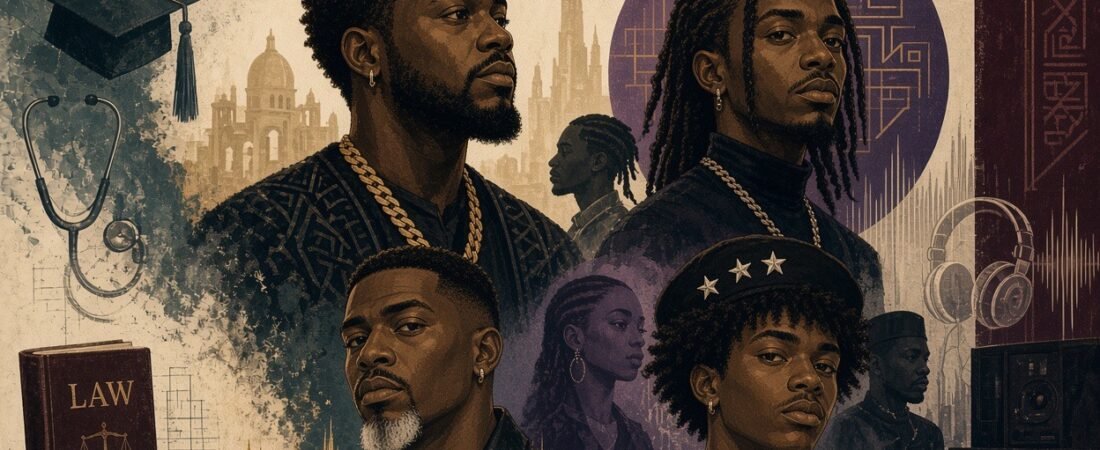
Become a doctor, a lawyer, an engineer.
Anything creative, music especially, was treated as a hobby at best, a warning sign at worst. Parents who caught a child freestyling instead of reading often responded with genuine alarm, not encouragement.
That pattern is breaking, and breaking loudly.
Take Ice King Ochacho.
Born Shedrack Adah, he is the thirteen year old son of King Mohammed Adah, a Benue State real estate mogul known publicly as Ochacho.
Rather than steering his son away from music, Ochacho has done the opposite, publicly celebrating him, funding his releases, and appearing visibly emotional at his son’s performances.
Davido himself reportedly told Ochacho privately that his son would become the future of Afrobeats.
A father actively building his son’s music career, rather than discouraging it, would have been unthinkable in an older generation.
He is not alone.
Champz, son of global Afrobeats star Wizkid, has also stepped into music, prompting online chatter about a rivalry between the two young artists.
Raheem Okoya, son of Eleganza industrialist Rasaq Okoya, spent years releasing music under the name Sir Raheem, openly acknowledging his privileged access while insisting he earns his own income and secured his own investors.
Interestingly, Raheem recently announced he is stepping back from music to focus on his role at his father’s company, a reminder that even a supported path does not always lead where it starts.
Then there is Davido himself, the clearest example of how far this shift has gone. David Adeleke is the son of billionaire businessman Adedeji Adeleke, founder of Adeleke University.
He never hid that privilege. But privilege alone does not explain over a decade at the top of Afrobeats, multiple globally certified hits, and a fanbase, 30BG, built through consistent work, not inherited comfort. Money can buy a studio session. It cannot buy the discipline it takes to stay relevant this long.
So the real story is not simply that rich men’s children are now allowed to make music.
It is that Nigeria’s creative industries have become respectable enough, and profitable enough, that being linked to wealth or fame, confirmed or not, has become its own kind of currency.
Parents who once condemned a child’s guitar are now sometimes funding the studio session themselves and online, the crowd is quick to hand out the nepo baby label to anyone who even sounds like they might have had help, whether or not that help was ever real.
The old ceiling has cracked. What replaces it, actual talent or borrowed shine, is still being sorted out in real time, one viral clip at a time.