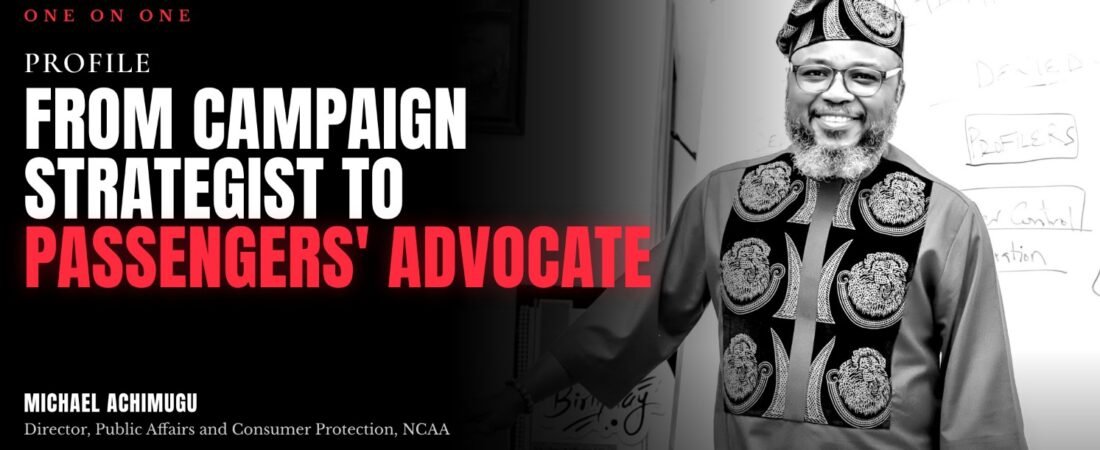
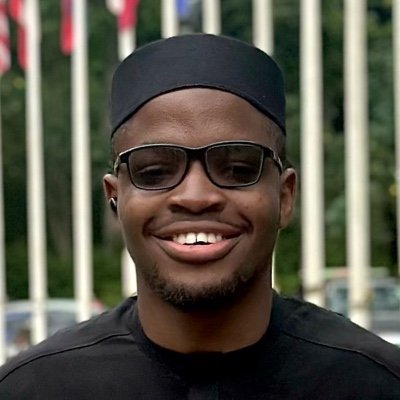
Michael Achimugu arrived at our interview dressed for comfort, a cream jacket over a checked shirt and the hat that has become part of his public image.
His office at the Nigeria Civil Aviation Authority in Abuja has a whiteboard he uses to explain passenger rules and a framed portrait of himself on the wall.
I had asked why he handles complaints so publicly, answering stranded travellers one by one on X.
“You’re almost sounding as if you’re angry I helped you,”
he said, before breaking into a smile. “Just kidding.”
He is the Director of Public Affairs and Consumer Protection at the NCAA, the body that regulates civil aviation in Nigeria.
He describes it, with some pride, as “probably the leading such authority on the continent of Africa.” His path to the job did not run through an airport.
His earlier career, as he put it, was in media consultancy.
“I’ve written books, and I’ve led media campaign strategy and structures for various presidential candidates in Nigeria as well. Basically, I’m a crisis communications manager.”
That background explains a great deal about how he does the job. Most regulators speak through press releases. Mr Achimugu speaks to passengers directly, often in public and often in real time.
In May 2026, replying to a traveller who complained that a case had gone nowhere, he wrote on X that a passenger whose complaint was not attended to had “every right to feel this way,” adding, “I take responsibility.” It is an unusual sentence from a government official, and it has earned him a following.
It has also earned him recognition. In April 2026, he received the Aviation Agency Director Award at the 15th Nigeria Aviation (NIGAV) Awards in Lagos. In June, the African Brands team presented him with its 2026/2027 African Brands Personality Award for his work on consumer protection. In October, he was named Protocol Man of the Year at the 13th International Protocol Officers Conference in Lagos, and aviation unions publicly commended him as a worthy ambassador of the NCAA.
He is quick to share the credit. Receiving one of those honours, he dedicated it to his children, his team and the NCAA’s leadership. In our conversation, he spoke more about process than about himself. Passengers, he said, should write to the airline first and come to the NCAA only when the airline fails to act. His officers are stationed at the terminals, and a new mobile app now carries complaints straight to a control centre at the Authority.
The crisis manager in him shows most clearly when he talks about conduct. He has seen tempers boil over at Nigerian airports, including a recent case in which angry passengers blocked boarding gates and disrupted other travellers’ flights. His advice is blunt.
“Never be unruly. Don’t ever resort to violence at the airport. You’ll be penalised seriously for it,”
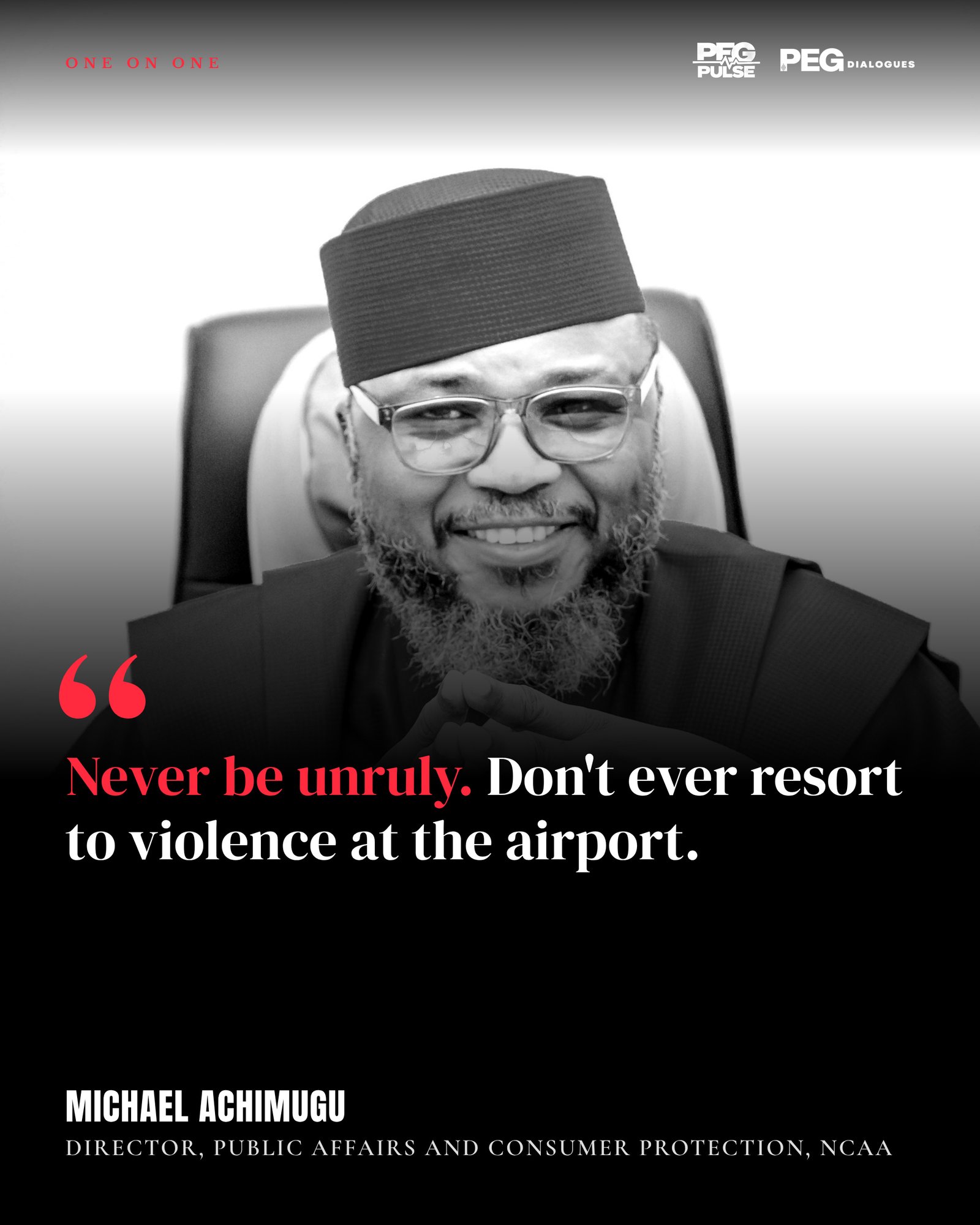
he said. “The best thing is to come to the NCAA. Your rights will be protected.”
For first-time flyers, he began with reassurance.
“Aviation is the safest means of transportation in the world, because safety is a priority, more than any other means of transportation,”
he said.
His practical advice was to read Part 19 of the Nigeria Civil Aviation Regulations, which sets out passenger rights and is available to download from the NCAA website.
“It’s difficult to start quoting all of your rights and regulations by heart,” he said with a laugh.
“Reciting them all, he joked, would mean this interview will not end for the next two hours.”
At the end of our conversation, he reminded me of my own case. “You did get your refund,” he said.
I did, in real time, and that is why I wanted to sit across from him in the first place.