
In most health campaigns, the gap between the most and least educated is treated as a fact of life. People with university degrees read the leaflet, understand the poster and book the appointment. People who left school early are the hardest to reach and the last to arrive at the clinic.
A new Nigerian study suggests that gap can close, and quickly.
Before watching a set of short dance-integrated eye health videos, 27.5 percent of participants with secondary education said they were willing to attend regular eye check-ups. Among those with primary or no formal education, the figure was 41.4 percent. Participants with university or college education started far higher, at 71.7 percent.
After the videos, all three groups landed in almost the same place. Willingness rose to 96.3 percent among those with secondary education, 96.6 percent among those with primary or no formal education, and 96.4 percent among graduates. The study’s authors describe it as a near-complete erasure of the gap between what different groups knew and what they intended to do.
The gains among the less educated groups were statistically significant. The change among graduates was not, largely because they already started high.
The research was published on 14 October 2026 in PLOS Global Public Health. It was led by Dr Ngozi Precious Uwagboe of the University of Benin and supervised by Professor Uchechukwu Levi Osuagwu of Western Sydney University and the University of KwaZulu-Natal. The co-authors are Adaku Israel Obia, Onyinye Lilian Nwaolai, Pemije Gadimoh, Eghosa Osahon Alari, Carolyne Naana Yanney and Nnamdi John Eseme.
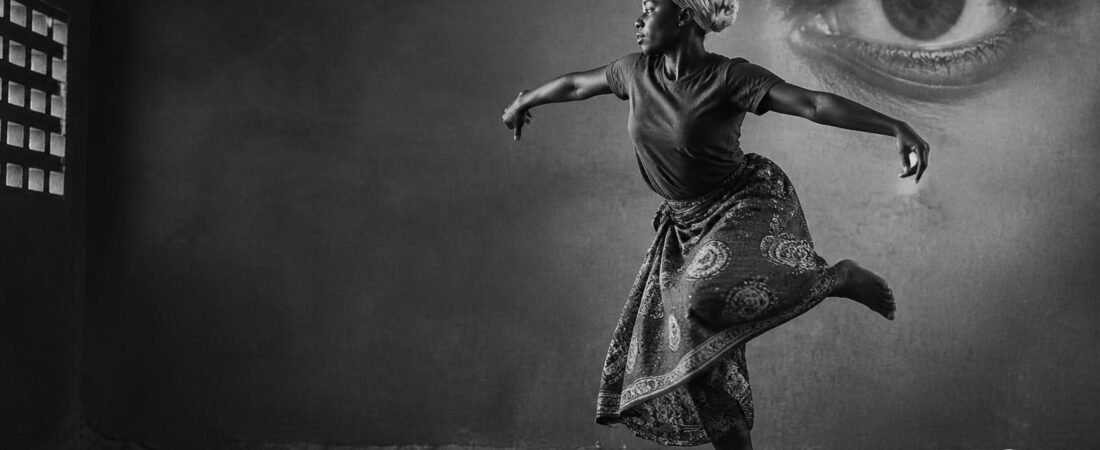
The team produced four videos, each about three minutes long. Professional dancers performed choreographed routines to music, while the screen showed the symptoms, risk factors, prevention and treatment of myopia, cataract and glaucoma, and corrected common myths about the eyes. Optometrists reviewed the content.
Between April and June 2025, 438 adults across Nigeria’s six geopolitical zones watched the videos at participating optometry clinics. The researchers measured their knowledge and intentions before and immediately after viewing.
Nigeria has more than 4.25 million people living with blindness or moderate to severe visual impairment, much of it from causes that can be prevented or treated. The barrier is often not only access but behaviour.
The study’s own baseline data showed this. Before the videos, nearly 40 percent of participants said they visit an eye clinic only when they have symptoms. Another 28.5 percent said they had never visited one. Only 24 percent had heard of diabetic retinopathy, a condition that can take sight from people living with diabetes without early warning.
The usual tools for changing this, such as posters, leaflets and talks, have had limited success, particularly with people who have less formal education. The researchers wanted to test whether a format rooted in Nigerian culture would do better.
The share of participants who felt they had enough knowledge about eye health rose from 42 percent to 68 percent. Scores on factual knowledge questions also improved.
Participants reported stronger intentions to protect their eyes, including wearing sunglasses, reducing screen time and attending regular examinations. Every participant who watched more than one video said they planned to adopt protective eye practices and share what they had learned with others.
Overall intention to visit an eye clinic rose from 80 percent to 90 percent. That change was not statistically significant, which the authors attribute to how high the starting point already was.
The authors are clear that this is a pilot. There was no control group, so the study cannot separate the effect of the dance from the effect of the information itself. Responses were self-reported and measured immediately after viewing, and stated intentions do not always become action.
The sample also leaned towards the educated. Three in four participants had tertiary education, recruitment ran mainly through optometry clinics, and everyone taking part had to read and write in English. The striking results among less educated groups come from 109 people.
The authors call for a larger randomised trial with longer follow-up to see whether people actually attend their check-ups.
The study is about eyes, but its central finding speaks to a wider question in public health: whether the way a message is delivered matters as much as the message.
Health communication in Nigeria has long relied on formats that suit people who are already comfortable with formal education. This study suggests that a format drawn from everyday culture, short, musical and visual, can carry clinical information to people that those formats often miss.
The authors suggest the videos could be screened in primary health centre waiting rooms and used by community health workers during outreach. The same approach could, in principle, be applied to other health messages, adapted into local languages and shared on the short-video platforms where young Nigerians already spend their time. Those uses were not tested in this study, but the findings make a case for testing them.
The study was supported by a grant from VOSH-International, which funded data collection across optometry clinics in Nigeria’s six geopolitical zones.
The full study is open access and can be read at https://doi.org/10.1371/journal.pgph.0005585. The videos are available at https://doi.org/10.6084/m9.figshare.33227856.
Pemije Gadimoh is a co-author of the study and a Doctor of Optometry student at the University of Benin. He leads the Global Optometry Student Community, OPTOGLOBE.